
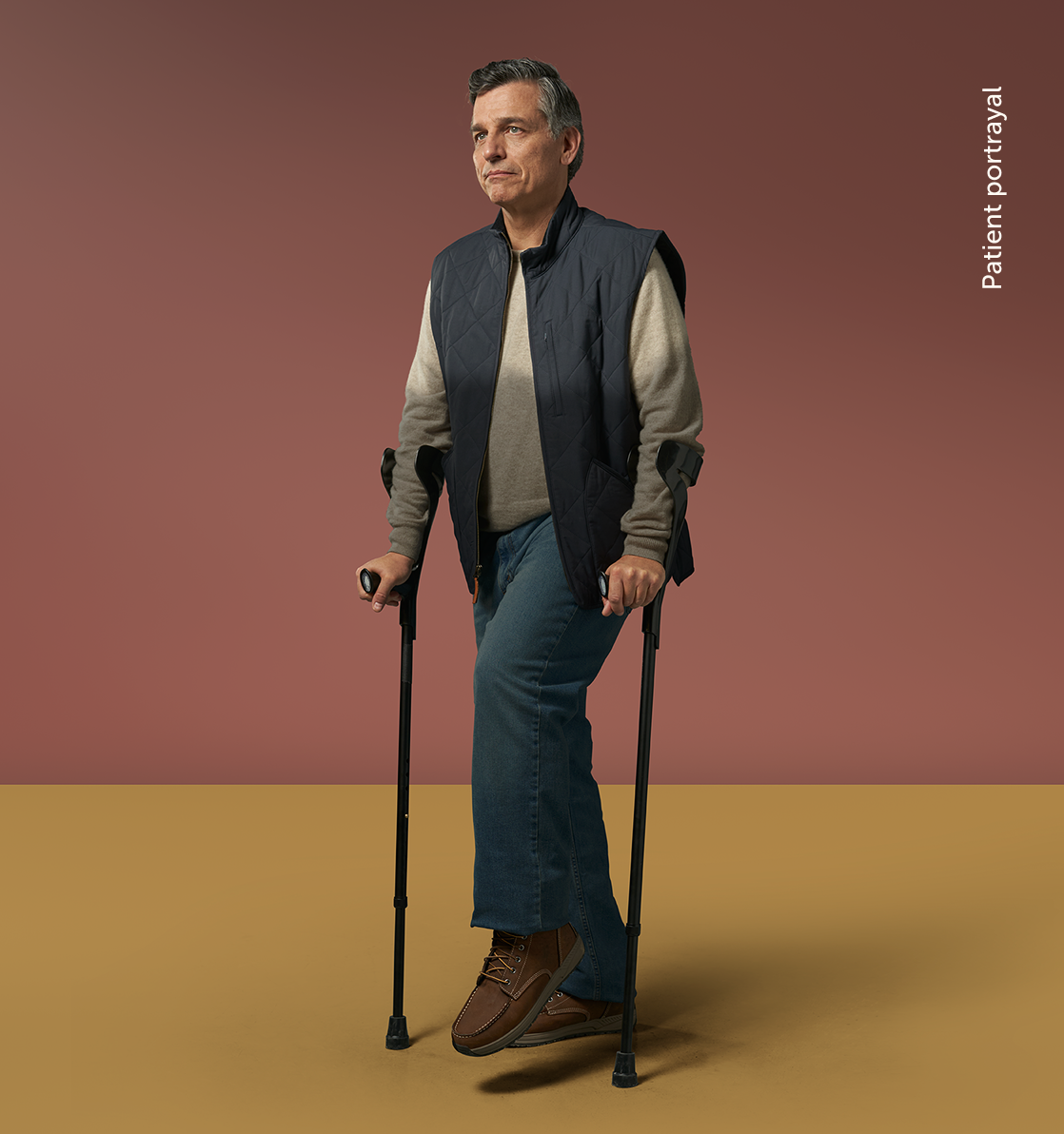
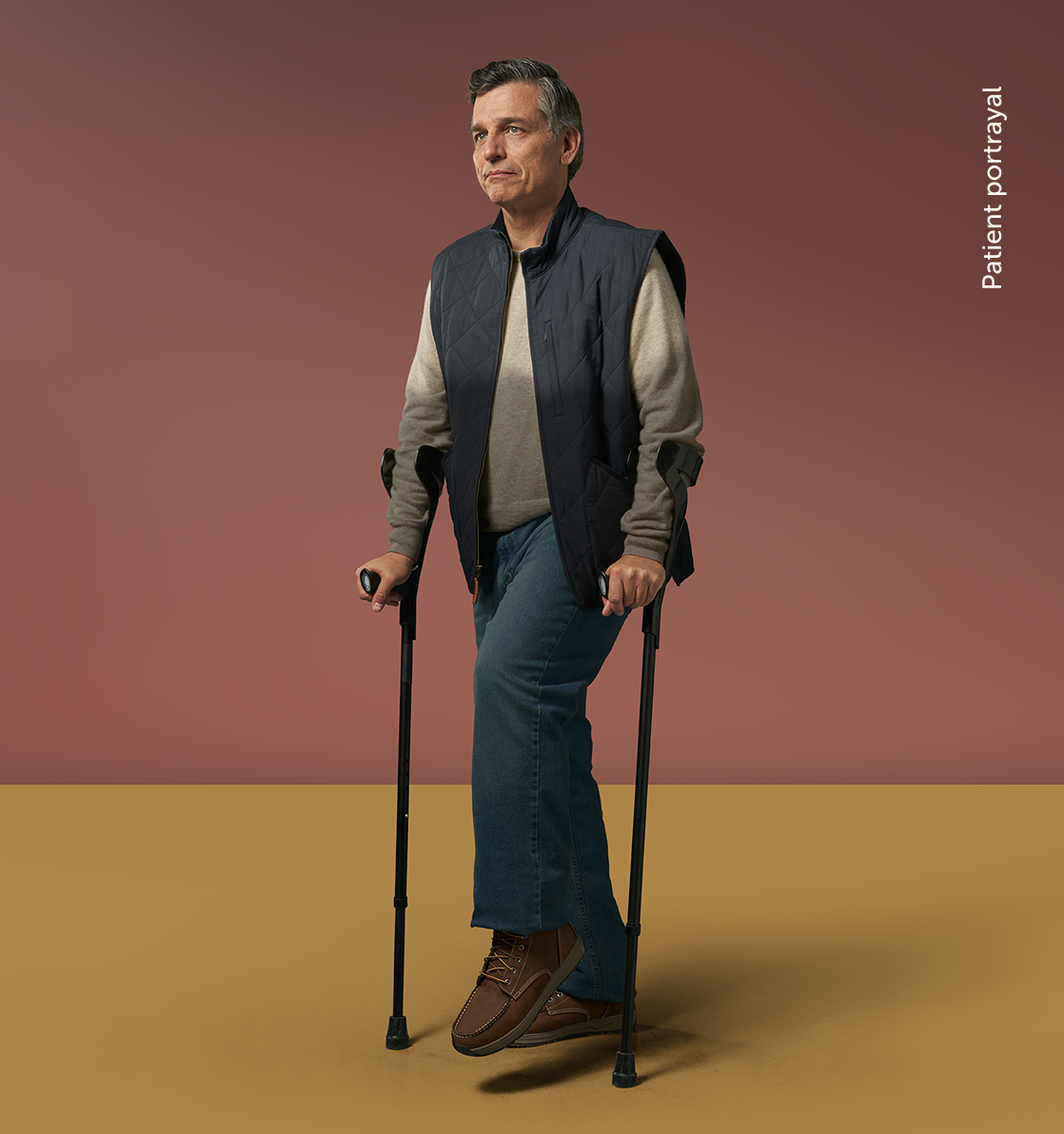
Patient portrayal
Measuring what matters in CIDP
Treatment for CIDP has evolved, but satisfaction with traditional therapies remains uneven. Recent data suggest that clinical observations don't always reflect patients' daily realities.1
Patient portrayal

CIDP=chronic inflammatory demyelinating polyneuropathy.
A satisfaction gap
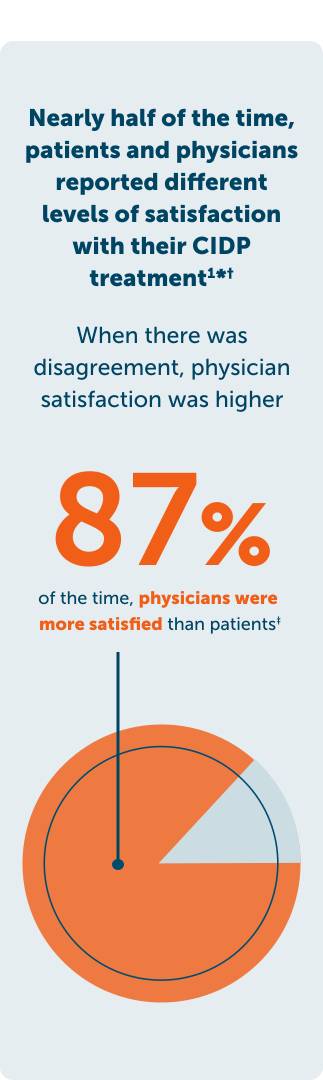
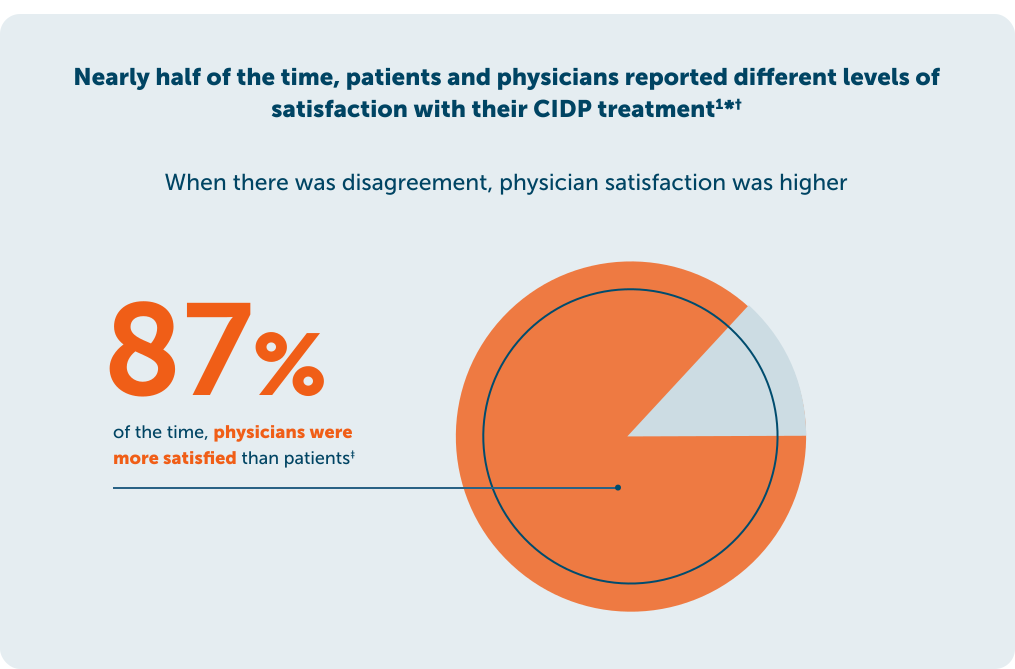
A notable gap remains between physician and patient perceptions of traditional CIDP therapies.1
*Data derived from Adelphi Real World’s CIDP Disease Specific Programme™, a real-world, cross-sectional survey including patients with CIDP (n=76) and their neurologists in the US, conducted between September 2022-April 2023. Data is shown for where matched physician-reported and patient-reported data are available. Fifty-two patients and physicians had overall treatment satisfaction data. To assess treatment satisfaction, patients and physicians used slightly different Likert scales: completely satisfied/satisfied/neither/dissatisfied/completely dissatisfied (patients) vs very satisfied/somewhat satisfied/neither/somewhat dissatisfied/very dissatisfied (physicians). This analysis assumes that the different Likert scales completed by patients and physicians can be treated as equal.2,3
†Treatments included immunoglobulins, corticosteroids, nonsteroidal immunosuppressants, biologics, neuropathic pain therapies, or plasmapheresis.2
‡Patients and neurologists reported different levels of satisfaction in 46.2% of cases. When there was disagreement in satisfaction, 87% of the time physicians were more satisfied than patients: (13.5% + 26.9%) / 46.1% = 87%.1,3
CIDP=chronic inflammatory demyelinating polyneuropathy.
Bridging the gap
The use of standardized outcome measures may help identify where patient and HCP perceptions may diverge. Standardized evaluation tools are commonly used in CIDP clinical trials and can be helpful in practice to measure disability and assess treatment response, including4,5:



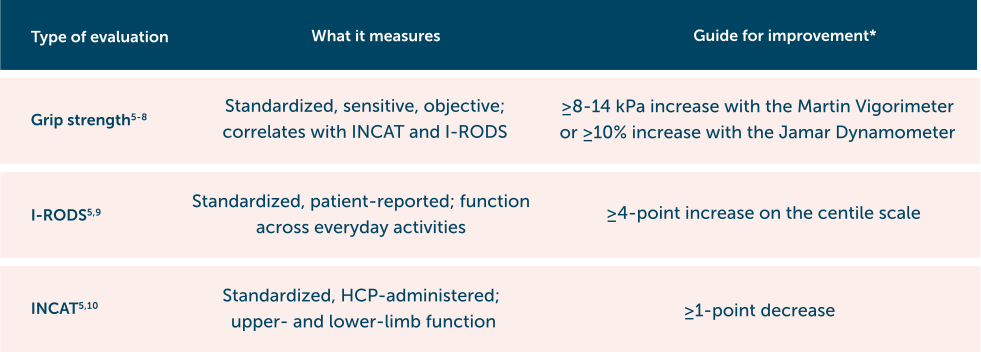
*Changes required to define improvement have not been adequately validated. The changes for assessment tools presented have been used in CIDP clinical trials and can serve as a guide for measurement during treatment.
CIDP=chronic inflammatory demyelinating polyneuropathy; HCP=healthcare professional; INCAT=Inflammatory Neuropathy Cause and Treatment;
I-RODS=Inflammatory Rasch-built Overall Disability Scale; kPa=kilopascals.
Listen to Srikanth Muppidi, MD, explain how utilizing objective measurement tools can help assess symptoms of CIDP
CIDP=chronic inflammatory demyelinating polyneuropathy.

CIDP=chronic inflammatory demyelinating polyneuropathy.
Why it matters
By routinely using measurement tools like grip strength, INCAT, and I-RODS, clinicians can track meaningful changes that reflect disease progression or improvement. For patients with CIDP, the disconnect between clinical progress and lived experience can be significant.4,5
As a healthcare professional, you can help narrow that gap by proactively:
- Initiating conversations about disease burden
- Optimizing treatment to drive functional improvement beyond stability
CIDP=chronic inflammatory demyelinating polyneuropathy; INCAT=Inflammatory Neuropathy Cause and Treatment; I-RODS=Inflammatory Rasch‐built Overall Disability Scale.

References: 1. Data on file. REF-05153. argenx US Inc. March 2026. 2. Nowacek D et al. Presented at: 2025 Muscular Dystrophy Association (MDA) Clinical & Scientific Conference; March 16-19, 2025; Dallas, TX. 3. Karkare S et al. Presented at: The American Association of Neuromuscular and Electrodiagnostic Medicine (AANEM) Annual Meeting; October 29-November 1, 2025; San Francisco, CA. 4. Allen JA et al. US Neurology. 2017;13(1):26-34. doi:10.17925/USN.2017.13.01.26 5. van Doorn IN et al. Ther Clin Risk Manag. 2024;20:111-126. doi:10.2147/TCRM.S360249 6. Allen JA et al. Neurology. 2021;96(14):e1876-e1886. doi:10.1212/WNL.0000000000011703 7. Vanhoutte EK et al. Eur J Neurol. 2013;20(5):748-755. doi:10.1111/j.1468-1331.2012.03851.x 8. Merkies IS et al. Muscle Nerve. 2000;23(9):1393-1401. doi:10.1002/1097-4598(200009)23:9<1393::aid-mus10>3.0.co;2-o 9. van Nes SI et al. Neurology. 2011;76(4):337-345. doi:10.1212/WNL.0b013e318208824b 10. Hughes R et al. Ann Neurol. 2001;50(2):195-201. doi:10.1002/ana.1088
